Approaching Normal…but never quite getting there
 I’m from a family of non-artists. Actually, a town of non-artists. Not only did we not know any artists, nobody knew anyone who knew an artist. Consequently, a kid who spent all her free time drawing and doodling (moi) was a strange ranger. Other habits set me apart. I was always looking at the ground, not because I was shy, but because I was a natural hunter-gatherer. I acquired a huge collection of rocks, driftwood bits and pretty shells early on. (Want to see my Petoskey stone collection?)

 When you work a craft show, it should be obvious that you will be handling money. But how to handle money often isn’t so clear.
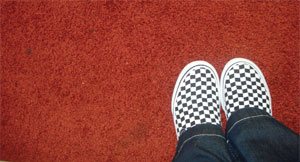 Flooring can make or break your entire display. Its potential to attract customers into your booth and keep them there cannot be underrated. When I do booth evaluations at both outdoor and indoor shows, I frequently see someone who has meticulously crafted their work and gone to great efforts to build a fantastic display, but has omitted a floor covering. Usually when I tell someone during an evaluation that they need a floor covering, they say, “I have one, I just didn’t bring it.” This is a terrible error and no place to cut corners if you want to make the most out of a merchandising opportunity. The floor is so important that it should not be an afterthought or an element to be overlooked altogether.
  I suppose digital photography will be perfected about the same time as flying cars hit the skies. Somehow, despite onboard computers that could drive a starship, folks are still having trouble getting really good photos. Rather then bemoaning an industry that put features over performance, let me focus on how to troubleshoot some of the most common problems people have with their digital photos.
 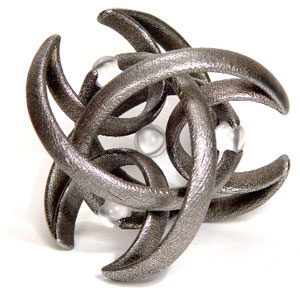 Where is the line between handmade and high-tech?
 Should I use